Safe Stroke Surgery: How Timely Neurosurgical Intervention Can Save Lives
Stroke is a medical emergency that occurs when the blood supply to a part of the brain is interrupted or when a blood vessel in the brain bursts. Without immediate treatment, brain cells begin to die within minutes, which can lead to permanent disability or even death. Fortunately, advancements in neurosurgery and medical technology have made stroke treatment safer and more effective than ever before.
What is a Stroke?
A stroke happens when the brain does not receive enough oxygen and nutrients due to a blockage or bleeding. There are two primary types of stroke:
Ischemic Stroke: Caused by a blockage in a blood vessel supplying blood to the brain.
Hemorrhagic Stroke: Caused by bleeding within or around the brain due to a ruptured blood vessel.
Both types require immediate medical attention to minimize brain damage and improve recovery outcomes.
Common Symptoms of Stroke
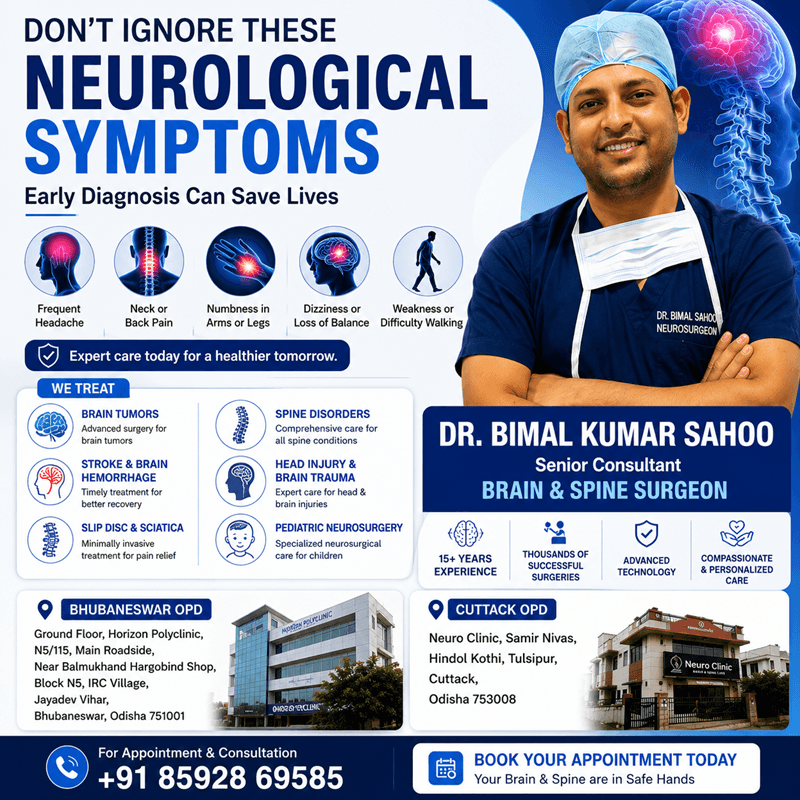
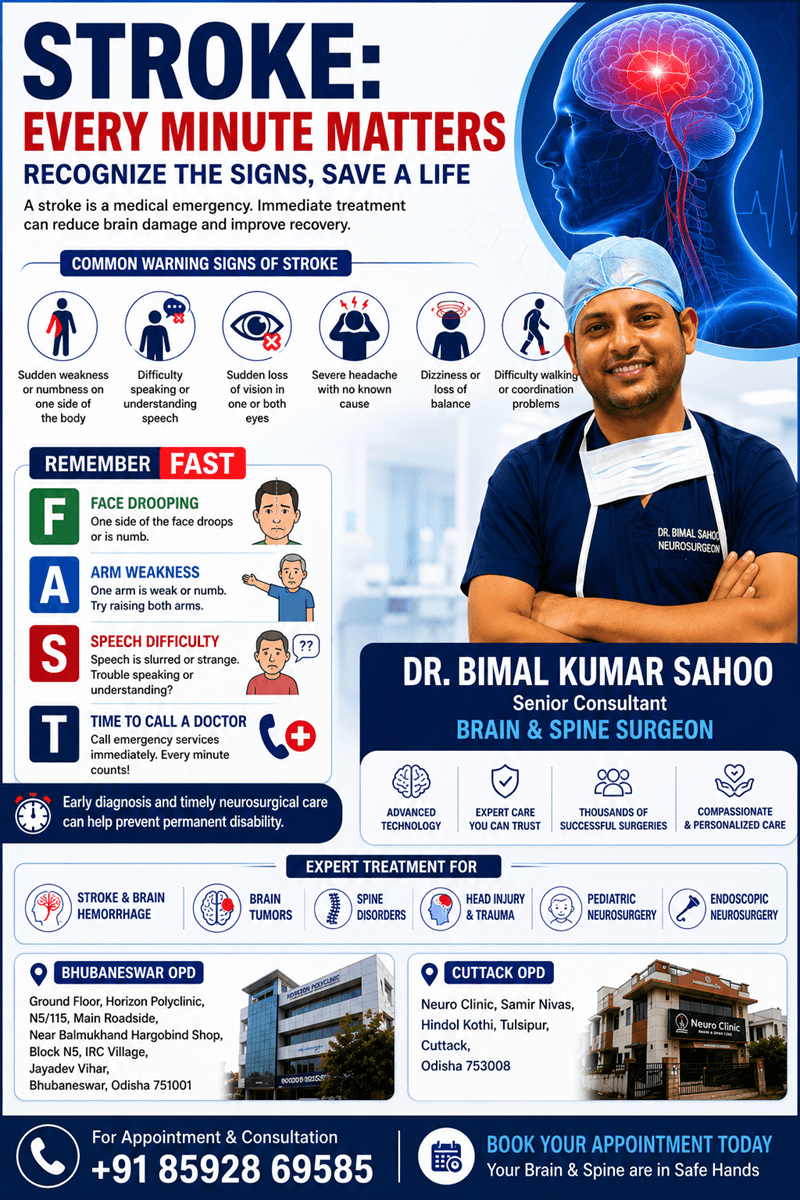
Recognizing stroke symptoms early can save lives. Common warning signs include:
- Sudden weakness or numbness on one side of the body
- Difficulty speaking or understanding speech
- Facial drooping
- Sudden loss of vision
- Severe headache
- Loss of balance or coordination
If any of these symptoms occur, emergency medical treatment should be sought immediately.
Importance of CT Scan in Stroke Diagnosis
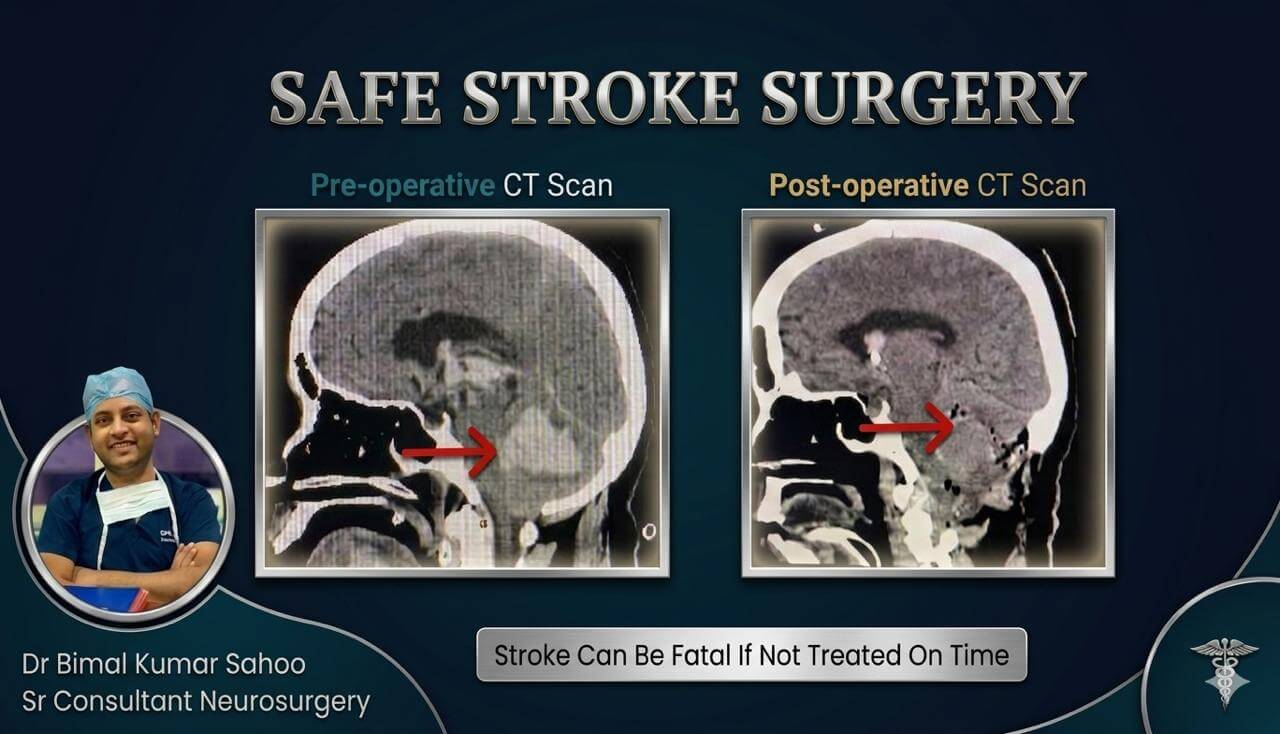
CT scans play a crucial role in diagnosing stroke. They help doctors determine whether the stroke is caused by a blockage or bleeding and identify the affected area of the brain.
Pre-operative CT scans help neurosurgeons evaluate the severity of the condition, while post-operative CT scans allow them to assess the success of the surgical procedure and monitor the patient's recovery.
When is Stroke Surgery Needed?
Not all stroke patients require surgery. However, surgical intervention may become necessary in cases where:
- There is significant bleeding in the brain.
- Brain swelling causes dangerous pressure inside the skull.
- A large blood clot needs to be removed.
- Blood vessels require repair to prevent further bleeding.
- Emergency decompression is needed to protect critical brain structures.
The decision to perform surgery depends on the patient's condition, imaging findings, and overall health status.
Benefits of Timely Stroke Surgery
Timely neurosurgical treatment offers several important benefits:
- Reduces pressure on the brain
- Prevents further brain damage
- Improves survival rates
- Enhances neurological recovery
- Reduces the risk of long-term disability
- Improves overall quality of life
Early intervention significantly increases the chances of a successful recovery.
Recovery After Stroke Surgery
Recovery varies from patient to patient and depends on the severity of the stroke and the speed of treatment. Rehabilitation may include:
- Physical therapy
- Speech therapy
- Occupational therapy
- Neurological follow-up care
A structured rehabilitation program helps patients regain strength, mobility, communication skills, and independence.
Why Immediate Treatment Matters
The phrase "Time is Brain" is commonly used in stroke care because every minute of delay can result in the loss of millions of brain cells. Seeking immediate medical attention when symptoms appear can dramatically improve outcomes and reduce the risk of permanent disability.
Modern neurosurgical techniques, advanced imaging, and specialized stroke care have made stroke treatment safer and more successful than ever before.
Conclusion
Stroke can be fatal if not treated on time, but advances in neurosurgery now offer hope to many patients. Early diagnosis, prompt treatment, and expert surgical care can significantly improve survival rates and recovery outcomes. If you or a loved one experiences symptoms of stroke, seek emergency medical attention without delay. Early action can save lives and protect brain function.